Adult Jiu-Jitsu turns pressure into practice, so real-life decisions start feeling simpler.
Adult Jiu Jitsu is often described as a workout, a skill, or a way to blow off steam after work. In our experience, the bigger surprise is how quickly it changes the way you think when life gets complicated. You start noticing patterns, choosing calmer responses, and making decisions with more intent.
That happens because Brazilian Jiu Jitsu is not just physical effort. Every round is a live problem that keeps changing. You try something, you get feedback immediately, and you adapt. Over time, that habit quietly follows you into your day: at your job, at home, and in the moments where you normally feel rushed.
For adults looking for Jiu Jitsu in Green Brook, NJ, this is one of the most practical benefits you can train for. We can help you get fitter and tougher, sure, but we also build the kind of thinking that holds up when your brain wants to panic.
Why Adult Jiu-Jitsu is basically problem-solving with consequences
The reason Adult Jiu Jitsu improves everyday thinking is simple: you cannot “think later.” In a live roll, you are solving a moving puzzle while managing your breathing, balance, and posture. If your timing is off, the position changes. If your priorities are wrong, you get stuck.
People call BJJ “physical chess” for a reason. You plan ahead, you recognize traps, you trade short-term comfort for long-term advantage, and you learn to see two or three steps in front of what is happening. That is strategic thinking under pressure, and it tends to stick.
The best part is that you do not need to be naturally athletic or unusually strong. Technique, leverage, and timing matter more than brute force, which is one reason adults stay with it for years. You get better by thinking better, not by muscling everything.
The “physical chess” habit: how you learn to analyze faster
You learn to define the real problem, not the loudest problem
A lot of everyday stress comes from solving the wrong issue first. On the mat, it is obvious when that happens. If you focus on pushing an arm away while ignoring your hips, you still get controlled. If you chase a submission while losing position, you get reversed.
That lesson transfers cleanly to work and home. You start asking: What is actually causing this situation? What is the leverage point? What can wait 10 minutes, and what cannot? Adult Jiu Jitsu trains that kind of prioritization because positions force you to pay attention to what matters most.
You build pattern recognition through repetition with variation
In training, the same positions show up again and again, but never exactly the same way. A partner’s grip is slightly different. The angle changes. The pace changes. So you learn the underlying pattern, not a memorized script.
That is the same mental skill you use in meetings, projects, and family routines. You stop needing perfect conditions to make a good decision. You get comfortable acting on what you know, adjusting as new information shows up.
Decision-making under stress: learning to stay useful when it’s uncomfortable
In normal life, stress tends to shrink your options. You rush, you react, you miss details. In Adult Jiu Jitsu, we practice inside that exact sensation, but in a controlled way. Your heart rate is up, your body is working, and you still have to make clean choices.
Over time, you learn a few “anchor” behaviors:
• Breathe first, then move with purpose
• Improve your position before chasing a finish
• Protect yourself while you build a solution
• Reset when something fails instead of spiraling
This is why Adult Jiu Jitsu in Green Brook, NJ is more than a fitness hobby. It is a rehearsal space for staying functional while things feel messy.
Focus training you can actually feel: why your attention gets sharper
Multitasking is not a thing when someone is trying to control your posture. You either pay attention or you get punished by physics. That is one reason many adults tell us their concentration improves outside the gym.
You start realizing how often your attention is split in daily life, and you begin to value single-task focus. In a roll, you learn to track grips, pressure, weight distribution, and timing without drifting. That sustained focus is a muscle, and it grows.
If you want a practical work benefit: people often notice they can sit down and finish a complicated task with fewer distractions. Not because life got easier, but because their attention got trained.
Spatial awareness and strategy: solving problems with your whole body
A big chunk of problem-solving is spatial reasoning: where you are, where the obstacles are, and where the exits are. Jiu Jitsu builds this because positions are literally geometry. Angle, distance, frames, and wedges decide whether you move or get pinned.
Adults who train consistently tend to develop sharper “body maps.” You become more aware of balance, posture, and alignment. That helps with everyday tasks too, from lifting safely to moving confidently in crowded places. It is not flashy, but it is useful.
This is also why people who “never thought they were coordinated” often surprise themselves. The coordination comes from learning the structure, not from being born with it.
Resilience: learning that setbacks are information, not failure
Problem-solving always includes failure. The difference is whether failure ends the attempt or improves the next one. On the mat, getting stuck is normal. Tapping is normal. Having a plan fall apart is normal.
That normalizes something healthy: setbacks are temporary and specific. You can adjust one detail and change the outcome. You can ask questions. You can try again. That mindset is resilience, and it tends to show up everywhere else.
We also see a quieter benefit: confidence without aggression. When you feel capable, you usually feel less need to prove anything. That is part of why Jiu Jitsu can support de-escalation. You get more comfortable staying calm, using your words, and avoiding pointless conflict.
Mental health and mood: why so many adults train for their head, not just their body
There is growing interest in BJJ for mental health support, and it makes sense. Training gives you structured challenge, social connection, and a clear way to measure progress. Research on adult participants has reported strong life-skill transfer, including improved confidence, mental flexibility, and mood, with many participants noting reduced anxiety as well.
We see the real-life version of that in class. You walk in carrying the day, you train hard, you learn something, you laugh a little, and you leave feeling steadier. It is not magic. It is the combination of movement, problem-solving, and community.
Beginner safety guide: how we keep Adult Jiu Jitsu sustainable
A common question we hear is whether Adult Jiu Jitsu is safe for adults starting later in life. The honest answer: it is safe when you train intelligently, respect taps, and build gradually. We coach for sustainability, not burnout.
Here is what we recommend for most new adults who want consistent progress and cognitive benefits without overtraining:
1. Train 2 to 3 times per week so your body adapts and you still recover well
2. Warm up with intention, focusing on joints, hips, neck mobility, and controlled movement
3. Tap early and often, because tapping is how you train tomorrow, not “losing”
4. Use technique over strength, especially early on, so you build skill instead of strain
5. Ask questions after rounds, because understanding lowers risk and speeds progress
If you are nervous about injuries, that is normal. Our job is to create a room where you can learn, scale intensity, and feel supported while you build skill over time.
How Adult Jiu-Jitsu upgrades your workday problem-solving
People often ask if the mat really affects the office. In our experience, yes, because the thinking habits are the same. A few examples we see adults apply quickly:
• When a project goes sideways, you stop forcing Plan A and start hunting for position, the stable step that gives you options
• When a conversation gets tense, you breathe, slow down, and look for the real objective instead of the emotional noise
• When you feel overwhelmed, you break the problem into grips and frames, small controllable pieces that lead to movement
• When you fail, you treat it like feedback, not a verdict on your ability
This is one of the reasons Adult Jiu Jitsu can feel strangely practical. You are training your mind to stay adaptive while your body is under load.
What to expect in an Adult Jiu-Jitsu class in Green Brook, NJ
If you have never trained before, the first class can feel like learning a new language. We keep the structure clear so you can relax and focus:
• You start with a warm-up that prepares the body for grappling, not just random conditioning
• We teach a specific technique or concept, usually tied to a position you will see often
• You drill with a partner, building the movement step by step
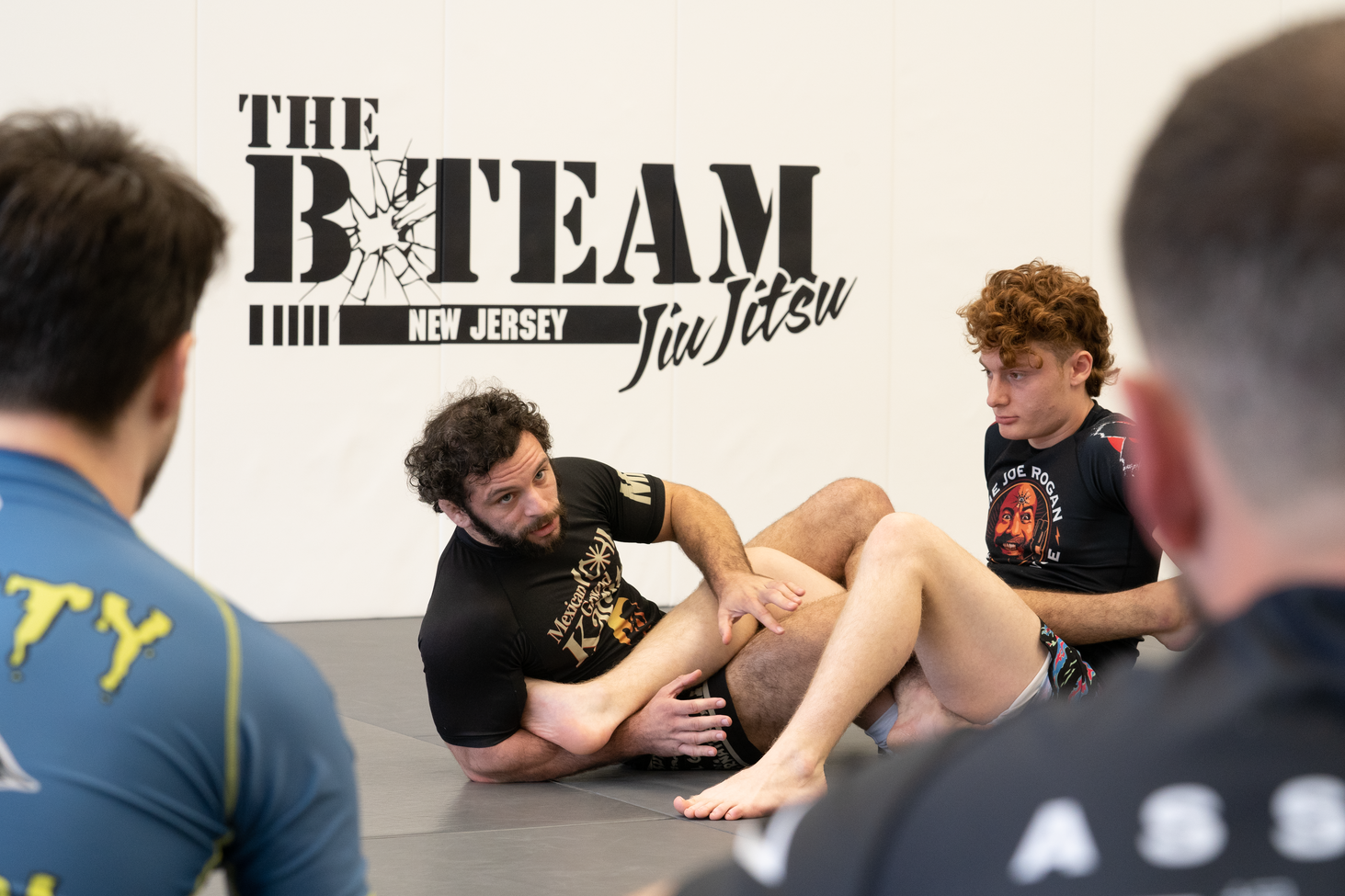
• You do controlled live training, where you practice timing and decision-making safely
• You cool down, ask questions, and leave with something concrete to work on next time
You do not need to arrive “in shape.” Showing up is the win. Fitness follows.
Take the Next Step with All in Jiu-Jitsu
Problem-solving is not just a mindset. It is a trained skill, and Adult Jiu Jitsu gives you a surprisingly direct way to practice it under real pressure, with real feedback, in a supportive environment. When you learn to breathe, frame, and think clearly on the mat, everyday problems tend to feel less personal and more solvable.
If you are looking for Adult Jiu Jitsu in Green Brook, NJ, we would love to help you build that calm, strategic confidence at All in Jiu-Jitsu. You can use the website to check the program details and the class schedule, then take it one step at a time.
Put these techniques into practice by joining a Jiu-Jitsu program at All In Jiu-Jitsu.