
Jiu Jitsu turns scattered attention into usable focus by giving your brain a real problem to solve, in real time.
Mental focus is one of those skills everyone wants and almost nobody has time to “practice” directly. We try productivity hacks, new routines, more caffeine, less caffeine, and still end up mentally foggy by mid afternoon. What surprises many new students is that Jiu Jitsu gives you a straightforward way to train focus without sitting still or forcing it.
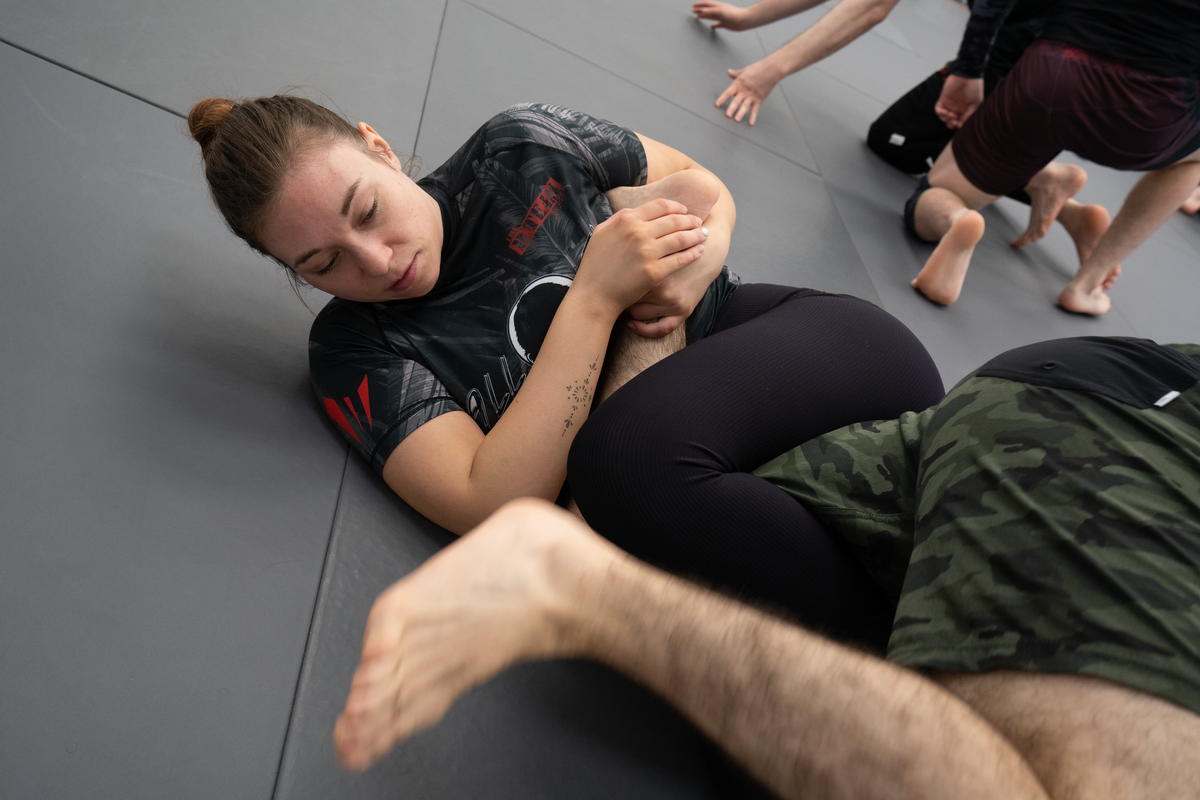
In our classes, your attention has a job. You are tracking grips, balance, breathing, timing, and the tiny decisions that separate getting stuck from getting out. Because the training is interactive, your mind cannot drift for long. You either stay present, or you feel it immediately in the roll, and then you adjust.
If you are looking for Jiu Jitsu in Green Brook, NJ and you care as much about mental sharpness as fitness, you are in the right place to learn how the art builds focus from the inside out.
Why Jiu Jitsu trains focus better than “trying to focus”
Focus is not just motivation. It is a skill made of attention control, emotional regulation, memory, and decision making. Jiu Jitsu pressures all four, in a safe setting, and that is exactly why it transfers to the rest of your life.
It forces present-moment awareness
During training, you cannot multitask. You have to feel where your base is, where your partner’s weight is going, and what your next move needs to be. That kind of attention is basically mindfulness with feedback. If you get pulled into distractions, you lose position. When you stay present, things slow down and become surprisingly manageable.
It gives your mind a clear target
A lot of “focus” problems are really priority problems. Your brain is trying to juggle too much at once. In a round, your objective is simple: improve position, protect yourself, and solve the immediate puzzle in front of you. That clarity is calming. You do not have to be perfect, you just have to be engaged.
Cognitive enhancement: making better decisions under pressure
One of the most practical mental benefits we see is decision making when your heart rate is up and the situation is messy. Research summaries on grappling arts note improvements in mental acuity and decision making capabilities in high-stress conditions, largely because the training demands strategy, problem-solving, and fast adaptation.
In Jiu Jitsu, you are constantly evaluating tradeoffs. Do you frame or shrimp? Underhook or recover guard? Hold position or advance? You learn that rushing often creates mistakes, and that patience can be an aggressive strategy. Over time, you start making cleaner decisions with less mental noise.
The “micro-decision” advantage
A typical roll contains dozens of tiny choices. That repetition matters. You are practicing how to scan for options, pick one, commit, and then reassess when reality changes. That is the same mental cycle you use in a stressful meeting, a difficult conversation, or a demanding day with family responsibilities.
Emotional stability is part of the skill
Decision making collapses when emotions spike. Training gives you a controlled way to notice those spikes and respond with something useful: breathing, posture, and a plan. Research summaries also connect training with better self-control, emotional stability, stress management, and the ability to read your partner’s intent while staying steady yourself. That is not just “toughness.” It is emotional skill-building, round after round.
Brain chemistry and neurological benefits that support clarity
Yes, you feel different after training, and it is not just “being tired.” The physical demands of grappling are linked with the release of brain-derived neurotrophic factor (BDNF), a protein associated with that post-training clarity many people describe as a runner’s high. BDNF supports neuron growth and survival, which relates to cognitive health, learning, and memory formation.
There is also research using imaging that suggests grappling martial arts stimulate the hippocampus, a region tied closely to memory. In simple terms: consistent training is not only sharpening your reactions, it is supporting the hardware that helps you remember, learn, and stay mentally switched on.
Stress, anxiety, and the focus you get when your nervous system settles
Focus is hard when you are stuck in fight-or-flight all day. A big part of why people feel mentally better after training is that Jiu Jitsu creates a structured outlet for stress. You show up, warm up, drill, and work live. The day’s noise gets replaced by one clear signal: pay attention to what is happening right now.
Research summaries have also noted clinically meaningful improvements in PTSD markers, anxiety, depression, and even reduced alcohol intake among practitioners in certain studies. The field is still understudied, but the trend is consistent: the mix of physical effort, problem-solving, and community can support better mental health. When your stress load drops, your ability to concentrate naturally rises.
Why “forced focus” becomes relief
In normal life, you can spiral. You can replay conversations, worry about tomorrow, and scroll for an hour without noticing. In training, you do not get that option. The demand for attention becomes a break from overthinking, which is why many students describe class as the best part of their day, even when it is challenging.
Focus through structure: how our classes build mental habits
We do not treat focus like a motivational speech. We build it into the structure of training so you absorb it by doing.
Drilling builds clean attention
Drilling is where you learn to pay attention to details without panic. Where are your elbows? What angle is your hip at? Are you balancing on your toes or your knees? Small details have big consequences, and that trains a kind of calm precision that shows up later when you need to concentrate at work or home.
Live rounds teach adaptability
Sparring is where focus gets tested. Your partner is not cooperating, and your plan will not survive intact. You learn to stay curious instead of frustrated. You learn to reset quickly. That ability to recover attention after a mistake is one of the most valuable mental skills we can train.
What you can expect from adult Jiu Jitsu in Green Brook, NJ
Adult training has a different flavor than people expect. It is intense, but it is also thoughtful. You are learning an art that rewards problem-solvers and steady learners, not just explosive athletes.
In adult Jiu Jitsu in Green Brook, NJ, we keep the environment structured and welcoming while still giving you real training. You will sweat, you will think, and you will leave with the kind of tired that feels clean, like your brain finally got to shut off the extra tabs.
Here is what usually changes first for new students who stick with it:
• Your attention span improves because you practice staying present through effort and discomfort
• Your stress response calms down because you learn to breathe and problem-solve under pressure
• Your memory for sequences improves because you repeat patterns, troubleshoot them, and refine them
• Your confidence grows because you gain evidence that you can handle hard situations without quitting
• Your day-to-day patience increases because you get used to progress happening one rep at a time
The mindset shift: from “I need motivation” to “I have a process”
A lot of people start because they want discipline. What they discover is a process that makes discipline easier. When you train consistently, you stop negotiating with yourself as much. You show up because it is what you do, and that identity shift supports focus in other areas.
You also learn to separate effort from outcome. Some days you roll great. Some days you feel like you forgot everything. Both are normal. The focus skill is returning to the task anyway, looking for one small improvement, and letting that be enough.
How we keep training safe, sustainable, and mentally productive
To build focus, you need consistency. Consistency requires training that your body can recover from and your mind can enjoy. We emphasize controlled progressions, clear coaching, and training partners who understand that you are here to get better, not to “win practice.”
We also help you scale intensity. You can train hard without training reckless. That matters because the mental benefit comes from time on the mat, and time on the mat comes from staying healthy.
A simple way to notice your focus improving outside the gym
You do not have to guess whether this is working. Pay attention to a few real-life markers over the first couple of months:
1. You recover faster after stressful moments instead of staying stuck in them
2. You complete tasks with fewer distractions because your brain is used to one-job-at-a-time effort
3. You make decisions with less hesitation because you have practiced choosing under pressure
4. You feel calmer in your body, which makes concentration easier
5. You sleep more deeply on training days, and that alone improves clarity
These changes tend to build quietly. Then one day you realize you handled something difficult and stayed steady, and it feels familiar, like something you already trained.
Take the Next Step
Building sharper focus is not about willpower, it is about putting yourself in the right practice often enough that your brain adapts. That is what we do every day on the mats: we train attention, decision making, and emotional control through a skill that stays interesting for the long haul.
If you want to experience that process in person, we would love to help you get started at All in Jiu-Jitsu here in Green Brook. Our goal is simple: give you a clear path into Jiu Jitsu that improves how you think under pressure, not just how you move.
Improve your fitness, confidence, and grappling ability by joining a Jiu-Jitsu class at All in Jiu-Jitsu.